Case Study
Seluna Ltd
Key Highlights
- Seluna Ltd, a Scottish med tech startup, founded in 2022 aims to become the intelligent layer of neurodiagnostics, particularly in paediatric healthcare
- Interface linked them to the University of Glasgow and through an Innovation Voucher Seluna Ltd established a proof of concept solution for home based diagnosis of childhood sleep disordered breathing
- Developed a novel AI algorithm pipeline, capable of identifying sleep apnoea from wearable cardiorespiratory signals
- Secured £580k in private investment and ~£267k additional public funding following the project
- Created a long term, multidisciplinary collaboration with academia (University of Glasgow), and multiple NHS boards, culminating in a new clinical trial across 6 NHS paediatric hospitals across the UK
Partners
University of Glasgow
Sectors
Electronics, Sensors & Photonics
Information & Communications Technologies
Life and Chemical Sciences
Regions
Glasgow & Clyde Valley
Transforming paediatric neurodiagnostics through AI‑enabled clinical data analysis to improve how childhood diseases are identified, diagnosed, and managed
Background
Seluna Ltd is a Scottish med‑tech startup whose work focuses on paediatric healthcare and transforming how childhood diseases are identified, diagnosed, and managed—starting with sleep‑disordered breathing. Through a collaboration with the University of Glasgow supported by Interface and an Innovation Voucher, Seluna has taken a major step toward enabling accurate diagnosis of childhood obstructive sleep disordered breathing through AI‑driven analysis of wearable and hospital device data.
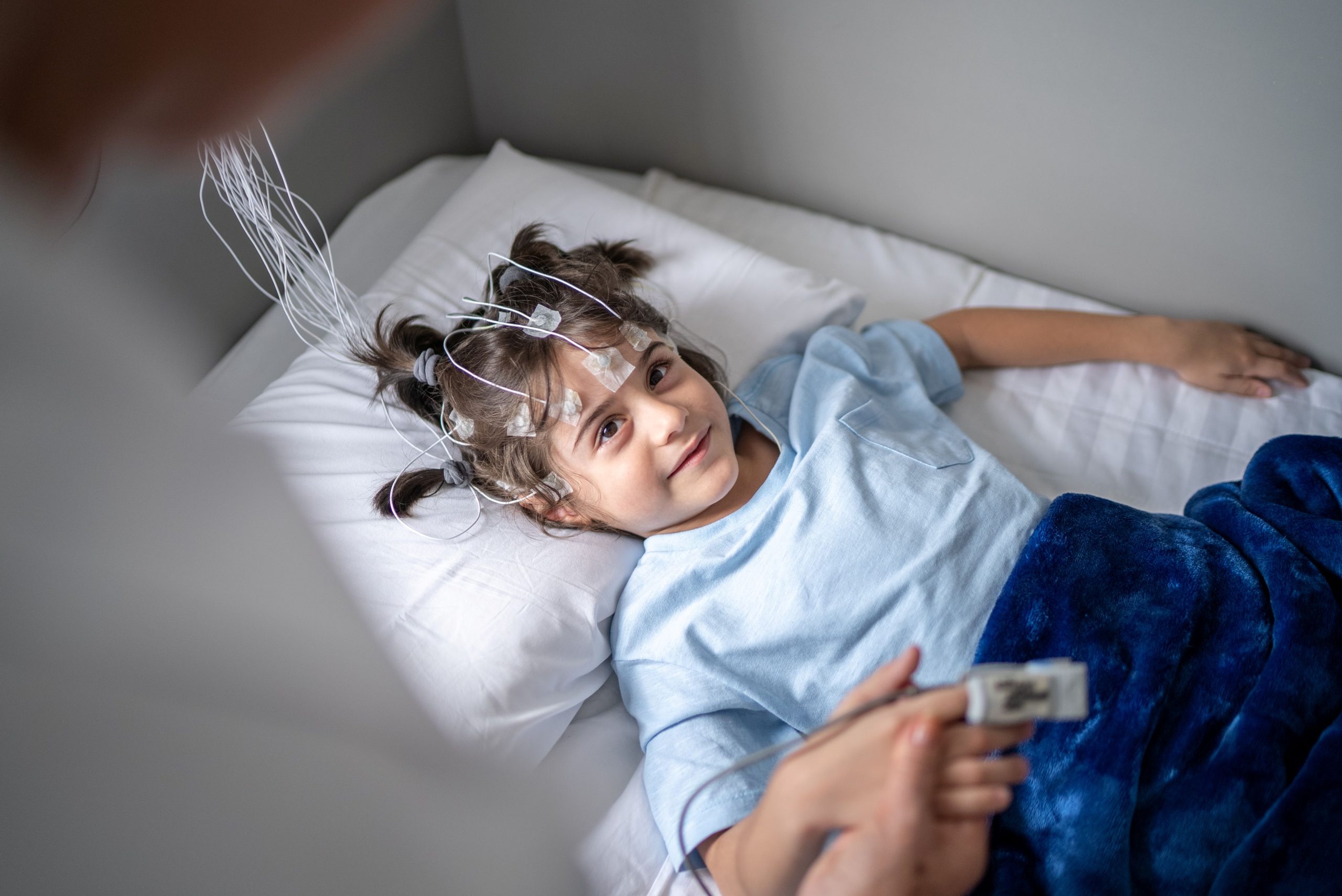
Childhood sleep‑disordered breathing, particularly obstructive sleep apnoea, is a common yet under‑diagnosed condition with significant short‑ and long‑term health consequences. Seluna Ltd was established to address this unmet clinical need by combining advanced software, data science, and machine‑learning expertise with clinically grounded innovation.
The Challenge
Approximately 4% of children are affected by obstructive sleep apnoea, yet an estimated 80% remain undiagnosed. Current diagnostic pathways rely on hospital‑based overnight sleep studies that are slow, expensive, labour‑intensive, and dependent on scarce specialist staff. These constraints place significant pressure on NHS services and mean many children never receive a sleep study or appropriate treatment.
Seluna had already developed machine‑learning software capable of automating sleep‑study analysis, tackling a major bottleneck in the diagnostic process. However, the challenge remains that an accurate diagnosis still requires an in-hospital study.
The Solution
Through an Interface‑funded Innovation Voucher project running from November 2024 to February 2025, Seluna partnered with the University of Glasgow to develop a novel AI algorithm pipeline, capable of identifying sleep apnoea from wearable cardiorespiratory signals. This was a feasibility study to show that Seluna’s custom AI data analytics, paired with existing wearable technology, may allow for accurate, home-based testing in children.
Interface played a critical role by initiating and funding the collaboration, enabling Seluna to access world‑leading expertise and facilities that were not available in‑house or commercially. The academic team – led by Dr Jack Radford and Professor Daniele Faccio’s Extreme Light Group—provided specialist knowledge in biophotonics, signal processing, machine learning, light–tissue interaction, optical signal acquisition, and experimental design. Their laboratory infrastructure and academic expertise enabled rapid feasibility testing and optimisation.
The collaboration was highly synergistic, combining Seluna’s strengths in AI, signal processing, and clinical data analysis with the University’s deep expertise in biosensors. The project was further supported by clinicians from NHS Greater Glasgow & Clyde, Royal Hospital for Children, Sleep & Respiratory Medicine, ENT, and Clinical Physics, exemplifying a strong industry–academia–healthcare partnership.
Company Benefits
- The proof of concept generated through the Interface‑supported project directly contributed to Seluna securing £580,000 in private investment in June 2025, enabling the creation of two new full‑time roles and safeguarding four existing positions.
- The collaboration strengthened Seluna’s credibility in deep‑tech medical innovation and supported the award of £267k in additional public funding, including the Innovate UK Women in Innovation Award (£70,000, December 2024) and a Scottish Enterprise implementation grant (£48,000, July 2025).
- Clinically, the work enabled Seluna to launch a 500‑patient Phase 1 clinical validation study with NHS Greater Glasgow & Clyde and to establish new collaborations with NHS Sheffield, NHS Southampton, and leading paediatric hospitals in the United States.
- Also it allowed Seluna to establish a long-lasting collaboration with the University of Glasgow, which continues to drive and accelerate R&D activities today.
Academic Benefits
- The project delivered significant academic impact, particularly for Dr Radford, for whom it represented the first opportunity to secure and lead an independent grant – an important milestone toward academic independence. It provided clear evidence of translational research, demonstrating how biophotonics expertise can address actual clinical and industrial challenges.
- The collaboration expanded the research group’s engagement with industry‑partnered funding and international networks. Follow‑on funding supported research visits to Boston in March 2025, strengthening links with MIT, Harvard University, and major US paediatric hospitals.
- The Interface project led directly to an extended consultancy agreement with Seluna, the award of an SFC QuantumARC grant, and the University of Glasgow’s involvement in a wider Innovate UK programme with Seluna, reinforcing long‑term strategic collaboration.
Next Steps
- Seluna and the University of Glasgow will continue working through an ongoing consultancy to deliver a research prototype device in 2026, supporting further investment and clinical validation.
- Seluna is planning a UK‑wide multicentre Phase 2 clinical study beginning in February 2026, alongside parallel preparations for US‑based studies.
- From an academic perspective, the results of the Interface project are supporting fellowship applications and a proposed co‑funded PhD studentship aimed at translating biophotonics research into commercial IP and product development. These next steps ensure sustained impact for both Seluna and the academic partners.