
Scaling Music Education Technology Through Academic Partnerships
Background
SymphoMe Ltd is an Edinburgh-based EdTech start-up transforming the way music is taught and learned. Much like Duolingo has done for language learning, SymphoMe is pioneering an AI-driven, gamified platform that makes music education measurable, affordable, and accessible.
Private music education is prohibitively expensive, where in the UK, over 50% of music education funding has been cut, further widening the accessibility gap. This is significant, given the well-documented social and psychological benefits of music education.
Its technology uses advanced AI, audio signal processing, and gamification to provide real-time feedback, personalised learning pathways, and exam preparation aligned with global standards
The Journey
Following an introduction via Edinburgh Innovations Student Enterprise team, Interface have helped them navigate and tap into the rich diversity of academic and student expertise.
These collaborations have allowed the start-up to tap into a vast array of skills, knowledge, and expertise across multiple disciplines—from computing and data science to psychology, marketing, animation, immersive technologies and sound design – supporting SymphoMe’s vision of becoming a leader in AI-driven, personalised music education.
University of Stirling – Data Analytics & Psychology
The flagship collaboration has been with the University of Stirling, where SymphoMe main challenge was to harness cutting-edge AI to measure knowledge gaps and automatically tailor learning journeys to support users’ unique needs. They worked with Dr. Sandy Brownlee on data analytics and machine learning and together they developed a data-driven engine to analyse user progress, identify knowledge gaps, and inform the creation of an AI-driven personalised recommendation system—the foundation of SymphoMe’s vision for a “Multimodal Music Teacher.”
This partnership also extended to Stirling’s Psychology students, who explored accessibility and inclusivity in EdTech. Their research provided insights into neurodivergent learners and strategies for ensuring the platform could engage diverse users. Additionally, Marketing students undertook a research on marketing plan and strategic market analysis for SymphoMe.
Impact:
- Groundwork laid for AI-driven personalised learning journeys and continued collaboration is being explored.
- Research outputs directly shaped product inclusivity.
- Stirling now uses SymphoMe’s journey as a live case study in teaching, and SymphoMe’s founder was invited to lecture on entrepreneurship and EdTech innovation.
Abertay University – Computing and Ethical Hacking
Students helped convert SymphoMe’s mobile prototype into a functional web version while integrating gamification features for content delivery, exercises and knowledge gap analysis. This additional technical support was crucial in helping develop the concept to a scalable product.
Edinburgh Napier University – Software, Animation & Sound Design
- Software engineering intern: supported code development and helped build an interactive mobile learning experience. Extended the summer placement, working alongside SymphoMe’s CTO to enhance the platform.
- Animation & graphic design students: created engaging animated tutorials and educational visuals, simplifying complex music concepts for younger learners. They also created multimedia content aligned with SymphoMe’s educational goals, created new ways of visual storytelling in the context of music education.
- Sound design students: contributed creative assets to enrich the platform’s immersive experience.
Glasgow School of Art – XR & Virtual Reality
Collaborations explored how VR could create immersive learning environments for music education, positioning SymphoMe at the forefront of next-generation learning experiences.
Company achievements
SymphoMe has:
- Secured its first angel round of investment.
- Grown its team from 1 to 6 and anticipate creation of 5 new jobs in AI development, digital learning design and sales within two years.
- Secured their first angel round of investment.
- Expected to enhance customer acquisition and retention, supporting a projected turnover of £1 million by year three post-launch.
- Developed an MVP and launched a pilot in UK schools laying the foundation for expansion into international markets, including North America and Asia, by 2026.
- Secured a licensing agreement with ABRSM (The Associated Board of the Royal Schools of Music), the world’s largest music education examination body, giving access to over 650,000 music students across 90 countries, accelerating global adoption
- Participated in the Black Founders Programme (with Digital Catapult, Sony Music UK, Sony Music Publishing UK).
- Reached the finals of Converge Awards (Creative Category) and the Scottish Knowledge Exchange Awards “Innovation of the Year” 2025.
- Awarded £100k SE SMART grant and £15k RTO funding from Innovate UK Business Connect to collaborate on a project with Digital Catapult.
- 1 of 5 finalists of GESAwards – Global EdTech Startup Awards special track for music education in partnership with Trinity College London
The Benefits
Company
- Academic collaborations bolster SymphoMe Ltd’s innovation capabilities and reinforce their reputation for cutting-edge research and development positioning them as a leader in music education technology.
- The integration of an AI-driven data analytics engine and personalised learning pathways strengthens the SymphoMe platform’s value proposition.
- SymphoMe allows access to high-quality music education, addressing gaps caused by funding cuts and promoting inclusivity for underserved communities.
Academic
- Ifeanyi, was invited back to the University of Stirling to deliver a guest lecture to final year and postgraduate psychology students on “The Psychology Behind Innovative Education Technology” sharing insights from his entrepreneurial journey.
- Provided a real-world test bed for cutting edge techniques in data analytics.
- A new industry application of data analytics can feed into a future REF impact case study and lead to academic publication.
“What can I say – we have worked alongside colleagues at Interface since 2019 with over 20 different projects under our belt. Each project has sharpened and nudged us forward. This genuine relationship has also led to a long‑term partnership with UWS and connections with multiple universities. From immersive tech to engineering, sustainability and now social robotics, Interface has helped us open ourselves up to fresh, innovative thinking with real impact. It’s a win‑win‑win.”
Mike Benson, Director, The Scottish Crannog Centre
Background
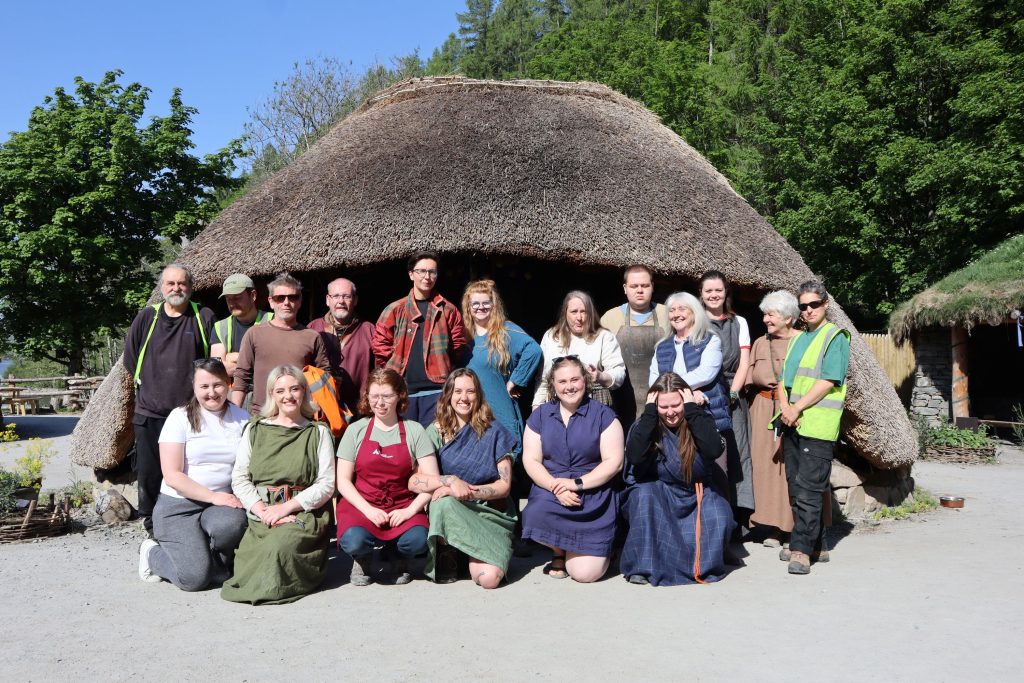
The Scottish Crannog Centre, located on Loch Tay in Perthshire, is an award‑winning museum and living history site dedicated to caring for, researching and sharing the stories of Scotland’s Iron Age crannogs. Through reconstructed dwellings, experimental archaeology, traditional crafts and immersive interpretation, the Centre brings to life how people lived, built and engineered over water some 2,500 years ago.
Since the original Interface‑supported project, the organisation has undergone a period of profound change. Following the devastating fire in 2021, the Centre relocated to a larger, better‑situated site at Dalerb on Loch Tay. This move accelerated its transformation from a successful but ageing visitor attraction into a values‑driven, museum‑focused organisation with social justice, sustainability and community at its heart. The Centre has since more than tripled its income, doubled staff numbers and embarked on a £6m redevelopment programme, including the construction of a new, full‑scale crannog using predominantly Iron Age techniques and materials.
All of this growth has been underpinned by long‑term collaboration with universities across Scotland, brokered and supported by Interface.
The Challenge
As the Centre evolved, it faced multiple, interconnected challenges:
- Modernising interpretation and exhibitions while retaining the authenticity and emotional power of hands‑on, outdoor heritage.
- Demonstrating the sophisticated engineering, sustainability and ingenuity of Iron Age building techniques in ways that are accessible to diverse audiences.
- Embedding social impact, community participation and sustainability into the DNA of a new national museum.
- Rebuilding resilience, capacity and confidence following the loss of the original crannog.
Meeting these challenges required specialist academic expertise, fresh perspectives and the capacity to experiment – resources that are difficult for a small cultural charity to access alone.
The Journey and Interface’s Role
Interface has played a sustained, strategic role since 2019, acting as a trusted connector between the Scottish Crannog Centre and academic expertise. Innovation Engagement Executive Lorna Watson worked closely with Director Mike Benson and the wider team to understand evolving ambitions and identify the right academic partners at each stage of development.
Rather than a single intervention, Interface enabled a portfolio of collaborations that grew alongside the organisation, spanning technology, engineering, design, sustainability, social impact, marketing and robotics. Over 20 projects have now been delivered, many supported by Scottish Funding Council Innovation Vouchers and follow‑on funding.
Key Collaborations and Developments
Immersive Technology and Interpretation (University of the West of Scotland)
The original Innovation Voucher project with UWS laid the foundations for a step‑change in interpretation. It delivered:
- A feasibility study for immersive and mixed‑reality heritage experiences.
- Designs for augmented exhibition spaces.
- Prototype VR and mobile‑based experiences.
These outputs informed the creation of a new gallery and continue to shape the Centre’s approach to storytelling, helping collections to “sing” to different audiences. The partnership has since expanded to include branding, marketing, student placements, VR development and sustainability‑focused projects, forming a long‑term strategic relationship.
Artefacts, Design and Creative Media (UWS & UHI)
Follow‑on projects that brought unseen artefacts to life and enhanced The Crannog brand include:
- A 3D printed replica of a rare Iron Age musical instrument bridge that visitors can handle.
- A student‑designed comic book aimed at educating children on Iron Age Scotland, the artefacts found on the excavation site and how they relate to life in 500BC. An authentic and meaningful project, the comic book is still sold in the centre today and the storyline drives the puppet show delivered to families throughout the season offering a great way to engage with younger audiences.
- An important piece of work involved the rebranding of The Crannog prior to the launch of the new site in 2025 following a £6 million development. Ewan Smith, a design student with UHI Perth developed the branding, delivered workshops to staff and volunteers, tested and honed the design coming up with the complete branding both physical and online for the opening of the new site at Dalerb.
Engineering the Iron Age (Heriot‑Watt University)
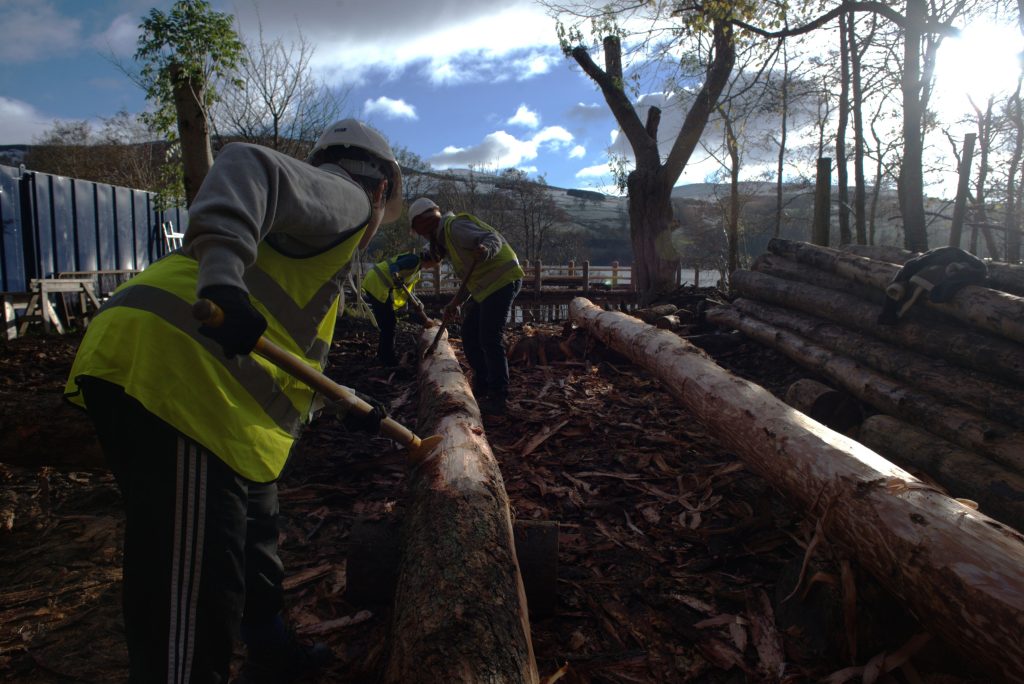
As part of the move to Dalerb, Interface connected the Centre with Heriot‑Watt University engineering students to explore the structural ingenuity of crannog construction. Working alongside craftspeople, archaeologists and engineers, students designed interactive model crannogs made from sustainable materials reclaimed from the main build.
These hands‑on models, launched in spring 2025, allow visitors to experiment with forces, stability and construction strategies, translating Iron Age engineering into playful, contemporary learning. For students, the collaboration reframed engineering beyond industrial contexts, highlighting sustainability, logic and longevity.
Measuring Social Impact and Sustainability (University of Glasgow)
A 2023/24 student placement focused on articulating the Centre’s societal impact. This work examined:
- Mentoring and work experience for local young people with additional support needs.
- Partnerships with organisations such as Glasgow Association for Mental Health, Maryhill Integration Network and UNESCO Refugee Integration through Languages and the Arts.
- The Centre’s four pillars of sustainability: people, partnerships, place and landscape.
The project helped evidence a sustainable museum model based on growing materials, skills, partners and audiences, supporting award submissions and future funding.
Film, Storytelling and the Rebuild (Edinburgh Napier University)
A filming placement documented the reconstruction of the new crannog, capturing traditional skills, community participation and the ambition to create a national museum with activism and inclusion at its core. This content supports interpretation, fundraising and digital engagement.
Looking Ahead: Social Robotics (University of Glasgow, 2026)
The next phase of innovation will explore human‑centred social robotics. In a co‑design research partnership, researchers will work with staff and visitors to prototype robots that enhance public engagement, for example, supporting tours or multilingual interpretation while reflecting the Centre’s values of inclusivity and care.
Impacts on the Organisation and Community
Organisational Growth and Resilience
- More than tripled income and doubled staff since relocation.
- Strengthened brand identity and national profile.
- Increased capacity to attract funding and deliver complex capital projects.
Innovation and Visitor Experience
- New galleries, interactive models, VR and tactile exhibits.
- Interpretation that connects ancient engineering, sustainability and contemporary challenges.
Community and Social Impact
- Deepened engagement with local communities, refugees, mental health organisations and young people with additional support needs.
- A co‑created museum shaped by “a thousand fingerprints and voices”.
Skills, Learning and Talent Pipeline
- Real‑world learning opportunities for students across engineering, design, media, computing and social sciences.
- A two‑way exchange where academic insight and lived heritage practice inform one another.
Academic Benefits
Academic partners have gained access to a rich, real‑world testbed for applied research and teaching. Students engage with authentic challenges, while universities strengthen their civic mission and visibility. Relationships have extended into advisory roles, placements, curriculum enrichment and long‑term research collaborations.
Moving Forward
The Scottish Crannog Centre demonstrates how sustained academic collaboration – enabled by Interface – can transform a small heritage organisation into a resilient, innovative, community‑centred national museum. Geography has proven no barrier to excellence; instead, partnership, curiosity and shared values have driven growth, impact and ambition far beyond the loch shore.
Revolutionising gluten-safe food production
Background
Prozymi Biolabs Ltd, an Edinburgh based biotechnology start-up was founded with a mission to revolutionise gluten-free food production. With a significant portion of the UK population affected by gluten-related disorders, including coeliac disease, gluten sensitivity and IBS, there is an increased demand for gluten-free products. However, existing gluten-free options often lack the taste, texture, and nutritional value of traditional gluten-containing foods, posing challenges for consumers.
Scientists from Prozymi Biolabs are testing a new enzyme technology that degrades gliadin, the protein that causes food sensitivities.
The Journey
Since its inception in early 2021 Prozymi Biolabs has experienced rapid growth and made a significant impact in the biotech world – more specifically in gluten-safe technology.
Co-founders Ioannis Stasinopoulos and Andreas Andreou were awarded their PhD’s at the University of Edinburgh and came up with the idea of developing a pioneering method of making gluten-safe bread while baking sourdough bread in their spare time. Receiving seed funding through the University of Edinburgh’s Data Driven Entrepreneurship program, which supports high growth start-ups associated with the university, gave Prozymi Biolabs the kick-start required to embark on their journey revolutionising the gluten-free bread experience.
Following an introduction via the student enterprise team at Edinburgh Innovations, Louise Arnold, Business Engagement Executive at Interface, has supported the Prozymi Biolabs team since they started, helping them navigate the academic research and development landscape, making relevant connections into universities, support networks and funding.
Some of these connections and projects include:
- Queen Margaret University and the SRUC Thrive Programme in support of product development, planning, marketing, pitching, nutrition, food legislation and access to general business support information.
- The Industrial Biotechnology Innovation Centre (IBioIC) Accelerator Programme, to guide and assist them on best practice, direct innovation support and peer to peer learning. They continued to collaborate with IBioIC, through the scale up of the gliadin-degrading enzymes using IBioIC’s scale up facilities at Heriot Watt University.
- Two projects with University of Aberdeen’s Applied Health Science students: one to identify the causes behind gluten disorders, the parts of gluten responsible, the key symptoms, diagnostic methods, and potential treatments used. And the second on gluten awareness, researching gluten-related topics such as gluten intolerance, celiac disease, and gluten-free diets analysing data collected to identify patterns, trends, and key insights regarding gluten-related issues.
- A collaboration with University of Stirling’s Business School students on developing marketing strategy and market and competitor analysis.
- A partnership with the Proteomics and Metabolomics Facility at the University of Edinburgh’s Roslin Institute, funded via the Healthier Products Innovation Fund, allowed Prozymi Biolabs to use their mass spectrometry equipment to develop a robust process for sequencing and characterizing gluten-degrading enzymes. This collaboration enabled the identification and expression of candidate enzymes, with a focus on specificity and efficiency in degrading harmful gluten peptides while preserving the integrity of bread’s texture and flavour.
The Benefits
Prozymi Biolabs are creating employment opportunities, generating collaborations with university facilities and provide experiential learning opportunities for students through Interface support. The project outcomes could yield multidimensional benefits in the future as follows:
- Social: Consumers will benefit from high-quality gluten-free products at lower prices, making them affordable for low-income social classes.
- Economic: The low production cost of gluten-free products made with their technology will alleviate NHS financial burden for prescribed goods to coeliacs and help products of those higher in the supply chain, such as local wheat and barley suppliers to reach the gluten-free market.
- Environmental: Reduced reliance on imported naturally gluten-free materials, used for existing gluten-free products, will minimise transport fuels and align with government priorities for carbon footprint reduction.
- Political: Support the government’s strategy for locally sourced wheat and barley grains to increase nation’s self-sufficiency and resilience.
Benefits to Prozymi Biolabs
- Collaboration has fostered an innovative environment, leading to the development of a Minimum Viable Product (MVP) through identification and characterisation of the gluten degrading enzymes. This has also enhanced overall productivity within the company.
- By pooling resources and expertise across the university networks, has led to increased R&D efficiency, cost savings and faster project completion. The collaborations have improved Prozymi Biolab’s market position enabling the development of cutting-edge solutions, while increasing their market valuation.
- Potential applications in brewing, animal feed, and pharmaceutical industries.
- This innovation has also led to the selection of Prozymi Biolabs for IBioIC’s Biotech Innovators incubator, University of Edinburgh’s Venture Builder Incubator, Barclay’s AgriTech Bridge program and Carbon 13 Venture Launchpad program opening avenues for further academic and research collaborations.
- Awarded Innovation of the Year at the Scottish Knowledge Exchange Awards 2024.
Benefits to Academics
- The partnership has provided the University of Edinburgh’s Proteomics & Metabolomics Facility with an opportunity to apply analytical chemistry tools in the food sector.
- Collaborating with the organisation has opened additional funding opportunities for the universities, allowing for expanded research capabilities.
- The collaboration has offered students the chance to engage directly with industry, enriching their learning experience and professional development.
Next Steps
Prozymi Biolabs’ innovative approach to gluten-free bread production has the potential of transforming the food industry, offering consumers high-quality gluten-free products with improved taste, texture, and nutritional value. Through collaboration with academic partners and participation in incubator programs, the company is poised to further advance its research and development efforts, paving the way for a new era of gluten-free innovation.
Next steps for Prozymi Biolabs include:
- Continued collaboration with the University of Edinburgh’s Proteomics and Metabolomics facility and Edinburgh Genome Foundry has resulted in an established pipeline for screening and expression of gluten-degrading enzymes which could be further developed to generate new promising candidates in the future for the needs of beer, pharma, or animal feed industries.
- New academic collaborations with Queen Margaret University Scottish Centre for Food Development and Innovation, to provide equipment and expertise for small-scale proof-of-concept gluten-free bread production; the School of Physics of the University of Edinburgh for potential collaboration for testing the rheological properties of initial gluten-free bread batches.
Danu Robotics is developing a revolutionary robotic waste sorting system to help the waste management industry significantly increase their productivity, prevent valuable resources going into landfill, boost the circular economy and clean up the environment.
Background
The world generates 3 billion tonnes of domestic solid waste annually, less than 10% of it is recycled. Worldwide, recycling sites require human intervention to pick out contaminants, which can pose health risks and is extremely inefficient.
Xiaoyan Ma founder of Edinburgh-based, clean tech company Danu Robotics, has combined her expertise in high performance computing (HPC) with her passion for the environment to revolutionise the efficiency of the recycling sector by developing an AI-powered, robotic sorting system.
She explained: “I have been a committed environmentalist since I was a teenager and always recycled my household waste, but I’d never thought about where it ended up. So, a couple of years ago, while I was studying, I decided to look into the whole process, and I was shocked at how inefficient it was.”
The Challenge
As a team of one, Xiaoyan needed help in identifying additional resources to support the development of the robotic solution. She required both experts in robotics and hardware development. She also called for help with software development and computer vision expertise. Experts in advanced data analytics and image recognition capability, would help develop a more accurate machine learning algorithm and object classification to enable the robotic system to differentiate between recyclable materials and general waste.
Following an introduction from John Hill, her student enterprise advisor at Edinburgh Innovations, Interface made several connections to different academic teams to support Danu Robotics on their journey of development.
The Solution
Interface connected Danu Robotics into the Design Manufacturing & Engineering Management (DMEM) department, at the University of Strathclyde. The DMEM students undertook a six-month project researching and developing the robotic picker equipped with a camera to identify objects and an appropriate algorithm to instruct the picker to pick out the recyclables and place them in a designated area. The robotic picker needed to meet predefined performance requirements, and in addition, the solution had to be durable, recyclable/sustainable, affordable, portable and re-programmable. Several options were considered to design robotic pickers that were fit for purpose ranging from, a custom solution where the robotic picker uses a suction and release mechanism rather than grab and release, to the modification of an off-the-shelf robot arm/picker to the combination of hard robot and soft robot.
In conjunction to this project, Interface also connected Danu Robotics into EPCC at the University of Edinburgh to develop software for identification and classification of objects and to define suitable hardware, including sensors and cameras, for the robotic picker.
The software development phase required development of a machine learning algorithm that takes image data and sensor data to differentiate recyclables from the general waste. The company had to build up a waste image database to help the system identify contaminants, the collection of the image data was supported by Glasgow City Council. Each item in this visual database was then labelled by a specialist data processing company and the updated database used to ‘train’ the machine learning algorithm to identify what can and cannot be recycled.
With initial system training complete, the software required further development to direct the robotic sorting system to remove contaminants from a moving conveyor belt as efficiently and effectively as possible. Working with EPCC’s Cirrus supercomputer resources, accelerated the development of the project, with two months of lab tests to integrate the software with the robotic hardware, followed by a three-month trial of the prototype system at Glasgow City Council’s recycling centre.
The initial collaboration with EPCC was funded by a SFC Innovation Voucher, then EU Horizon 2020 (H2020) funding which in turn helped leverage £70K in a SMART Scotland grant. They have recently secured SFC Advanced Innovation Voucher funding to continue development work with EPCC.
Other opportunities which Interface have been instrumental in assisting Danu Robotics with include:
- An MSc project for a design engineering student from Heriot Watt University interested in robotic design and kinematics to design a robotic arm that can sort waste items quickly and lift loads of up to 20kg while the entire arm assembly is moving at high speeds. An optimal design needed to consider the harsh dirty and dusty operating environment and the high speeds that the assembly needed to work in. The project provided an opportunity to produce an innovative and challenging piece of academic research, but also engagement in industrial research and product development.
- Another MSc opportunity with DMEM students at the University of Strathclyde involved the development of a control system for the waste sorting robot. Students interested in control systems, kinematics, and industrial design worked to identify a closed loop control system best suited for application in a heavy industrial robotic waste sorting system.
- A further project is underway with Design Engineering students at Heriot Watt University looking at the design and development of prototype of a new emergency stop system which needs to be designed to bring the mass to a stop in a safe manner. The robotic system uses a belt drive system driven by an industrial servo motor with no service break and currently relies on the frictional losses present to come to a stop in case of an emergency or loss of motor torque.
The Benefits
- The development of a revolutionary robotic system for the recycling and waste management industry to significantly increase recycling efficiency;
- Danu Robotics’ prototype can work at 40 picks per minute versus trained human operators that work around 10-20 picks per minute.
- It can reduce the contamination rate from current level of 50%, to 10% to below 1% while saving on operating costs ranging from 30% to 100%.
- The technology can be used by any recycling facility worldwide regardless of its size, its current technology or location. It can support recycling activities in both developed countries and developing nations.
- Danu Robotics’ efforts are paying off with several large European recycling companies showing interest in the product.
- Since inception in 2020 Danu Robotics has grown from 1 to 10 employees and has raised £275K from Sustainable Ventures and Old College Capital, £160K Smart funding, £75K EDGE Funding, £43K in support from Higgs Business Incubation Centre and £20K from SFC innovation voucher scheme.
- In September 2023, Danu Robotics joined the prestigious Octopus Ventures Springboard programme and CEO Xiaoyan Ma gave a keynote at the Carbon13 conference.
The Get Set Yeti app is in development, themed around a clan of yeti characters, that allows younger children to understand their emotions, through discovering ‘emotion beasties’, enabling difficult concepts to be put across in an age accessible and engaging way.
Background
Get Set Yeti is a Digital Education business, that specialises in using storytelling and character-based learning to make Growth Mindset accessible to younger children at school and at home. They aim to level the ‘educational playing field’ by helping children from all walks of life develop the skills to become confident, resilient learners. They also provide materials for parents to build their confidence and capacity to do the things at home that have an impact on creating solid school foundations in Early Literacy and Early Numeracy.
Get Set Yeti supports educators and parents to help children develop learning resilience and confidence through building a growth mindset, and through emotional literacy. They offer a range of programmes and resources themed around a clan of yeti characters.
The company came into existence through recognition of a need in the field and has been developed by its founder Carol Arnott. An experienced practitioner both in Primary and Community Education, Carol employed Growth Mindset techniques initially to develop a rhyming story to help local families struggling with learning confidence. The story of “The Yeti’s Roar” was born, developed into a book which grew into a learning programme that was successfully trialled in several local schools and nurseries in the Dundee area.
Developing the programme became a passion of Carol’s and with the help of Business Gateway and the Elevator Business Accelerator, where Carol was introduced to Interface, her business began and demand quickly developed to the stage of looking to grow the team and expand into other cities – then Covid hit. Unable to get into schools due to closures and distancing regulations and with other contracts put on hold it became apparent that digital learning was the way forward. A new site was built and ‘Get Set Yeti’ evolved and grew.
The Challenge
Get Set Yeti was created to provide Growth Mindset resources for children under 8 due to the lack of material available. In the educational climate, there was a growing need for children to learn to be more resilient in learning and it was widely recognised that learning to develop a ‘Growth Mindset’ could successfully meet this need.
Get Set Yeti was interested in developing an app or platform that could help young children understand and process emotions using Growth Mindset to help maintain positive mental health.
The Solution
Through the Accelerator in Dundee, Carol met Lorna Watson of Interface who identified University of Dundee’s Dr Michael Crabb (School of Science and Engineering) and Dr Alexia Barrable (School of Education and Social Work) who had the required academic expertise to develop an app that could help younger children develop emotional literacy and self-regulation. This initial project was taken forward with a £5000 Standard Innovation Voucher.
The team at the University of Dundee helped initialise ‘The Yeti Field Guide to Feelings’ app to help children develop emotional literacy, supported by parents and educators.
Based on the premise that deep in the forest on top of Yeti Mountain the yetis sometimes come across ‘Emotion Beasties’ that have escaped from children in the villages below. Once caught, the yetis learn how to look after them using their special book ‘The Yeti Field Guide to Feelings’. They learn that caring for feelings takes practise and learn techniques to manage them through online interaction and additional printable activities and resources.
The app will incorporate:
- Simple gameplay to capture the engagement of the user.
- Diagnostic tool Information on emotions.
- A range of resources and tools to reinforce and support, designed by appropriate mental health experts.
This innovation sits right at the heart of Get Set Yeti’s core strategy as it uses process design to help children and families understand difficult concepts and gives them the tools to develop skills to learn successfully using Growth Mindset techniques.
The Benefits
- Get Set Yeti created a collaborative co-design programme for children and are in the process of securing funding to create the app with all the necessary building blocks in place.
- Get Set Yeti have developed an ongoing partnership with the University of Dundee and are able to provide opportunities for current students and graduates.
- Further opportunities to connect to the School of Education, CLD and Social Work during the testing phase of the app, along with the Department of Science and Engineering.
The Next Steps
Get Set Yeti have transitioned through the restrictions brought about by Covid19, transforming from a localised, face-to-face delivery company to an online-learning portal with international potential.
Following on from this initial project the relationship between Interface and Get Set Yeti has continued to grow and there have been several more successful student projects/placements for a range of things from marketing to behavioural analysis as follows:
Due the restrictions brought about through Covid19 Get Set Yeti pivoted to produce a digital version of their material and with the help of Abertay University the company developed a digital marketing strategy to promote their digital offering and transform from a localised business to offer their products nationally and develop a marketing campaign to appeal to local authorities, head teachers, infant teachers and parents.
A successful student placement project with the University of West of Scotland helped Get Set Yeti achieve a targeted marketing campaign appealing to potential clients and partners; utilising social media and other appropriate available channels.
The University of Stirling undertook some behavioural analysis to help Get Set Yeti understand and develop customer personas to allow them to enter new markets and target their future campaigns for maximum impact.
University of Highlands and Islands students are currently working directly with the Musical Director and CEO to help devise a digital marketing and social media campaign to promote an album of original ‘Yeti Songs’ to enhance the delivery of Growth Mindset learning to younger children and their families.
ZAZA & CRUZ to create a unique natural skincare blend using by-products of the whisky distillation process to rejuvenate and moisturize the skin whilst also shielding against cellular damage and anti-aging.
Background
ZAZA & CRUZ is a natural skin care company that aims to provide high-quality natural ingredients at a reasonable price. Its mission is to make its customers feel confident in their skin.
Rebecca Hastings, a makeup artist, and beauty specialist founded the company in 2013. Her children inspired the company’s name. As a make-up artist, she became increasingly concerned about what was in the products applied to the skin of her clients and her children. Consequently, she researched the most beneficial natural oils and botanicals in 2011 and created her unique natural blend of ingredients that rejuvenated and moisturized the skin while also shielding against cellular damage and anti-aging.
The Challenge
Kirsty of Interface met Rebecca at a HIE event in 2019, where they discussed the innovation potential of her business. They chatted about the beneficial effects on aging of the skin that the sake yeast fermentation process was proven to have by a Japanese company SK 11 in the 1970’s. The resulting complex that was created is now used throughout the whole Japanese skincare range. This led on to a conversation about the potential of whisky in skincare.
ZAZA & CRUZ were looking to use natural ingredients and processes to develop an active antioxidant/enzyme extract from whisky which would help with skin rejuvenation and could be used in their luxury skincare range.
Rebecca, founder of ZAZA & CRUZ was seeking to find out if the antioxidants and enzymes produced during the whisky distilling process could prove beneficial for skin rejuvenation in collagen and cell turnover, and if they could be extracted to become a natural ingredient in her skincare products.
The use of the findings will enable ZAZA & CRUZ to infuse a brand of whisky into their luxury skincare line. This in turn will benefit the partner of the whisky brand to tap into a wider cosmetics market.

The Solution
Robert Gordon University came forward to support Rebecca’s ideas, and Kirsty stayed on hand to support Rebecca with discussions. Rebecca felt that the expertise and enthusiasm from the team at RGU were the right fit for her and so moved forward with an Innovation Voucher
The project focussed on extraction, analysis and testing to discover and prove that the active and complex mix of antioxidants, enzymes and plant phenols released from whisky during the distillation and fermentation process could be extracted and provide a natural and safe solution for the skin which could then be used in the whole luxury line of skincare products for the consumer.
Firstly, the project looked at the antioxidant capacity of pot ale and effluent samples from whisky distillation using different assays as well as evaluating their toxicity at a cellular level. This was then applied into the formulation of the skincare products. Finally, an assessment of their antioxidant activity, that is, their protective effects on skin, was investigated. It was found that placing the nutrients from whisky in skincare can help to boost the skin and help fight free radical damage from the environment. In addition, polyphenols from whisky have the added benefit of helping to reduce inflammation, puffiness, and calms redness in the skin; making is a great ingredient to use in a moisturiser every day.
The findings from this collaboration will enable ZAZA & CRUZ to infuse a brand of whisky products into their luxury skincare line that can benefit consumers’ skin.
The Benefits
The benefits to ZAZA & CRUZ:
- Being able to work with a highly specialized and qualified team at RGU with great knowledge of the extraction process for antioxidants.
- A better understanding about the process of extraction and how to adopt a more scientific approach towards testing and incorporating ingredients into skincare products.
- Quality results that can be used to push the project forward and be innovative in the skincare industry.
The Crover – the world’s first robotic device that ‘swims’ through grains to monitor their condition.
Background
Crover Ltd https://www.crover.tech has developed the world’s first small robotic device, known as a ‘CROVER’, that monitors cereal grains stored in bulk inside grain bins or storage sheds. The CROVER device can “swim” within the grains and uses on-board sensors to measure local parameters, such as temperature and moisture, to build a full map of the conditions within the grains. Unlike current grain monitoring solutions that measure only one variable and have limited reach, the CROVER’s remote monitoring capabilities provide real-time data across a range of measurements allowing grain storekeepers to identify critical conditions, like hotspots early and maintain quality of the grains through proactive management.
Crover Ltd were a start-up when they initially approached Interface in 2019, they have since grown from two co-founders to 20 employees.
Since 2019 they have secured significant investment, raising over £600k in innovation prizes and grants (including Scottish Enterprise and Innovate UK). They then opened a seed funding round for investors and hit their £150k target.
The Challenges / Solutions
“When we initially met Interface, we didn’t have a specific R&D challenge as we were focused on developing our product inhouse. An obvious area for support would have been in the areas of design and engineering, however, through discussions with Louise, she assessed how our business worked and proposed that we undertake a project with the Scottish Financial Risk Academy (SFRA). The project with the SFRA helped us determine precise financial estimates of the value of Crover data to grain storekeepers and its impact on the grain storage economics. Understanding the financial impacts of Crover’s monitoring capabilities, had wider implications such as being able to quantify monetary value to grain insurers, and the potential to reduce insurance premiums for farmers and grain merchants.” Lorenzo Conti, Co-founder Crover Ltd
Following on from this initial project, one of the main technical challenges Crover Ltd faced related to the precise location tracking of the device within the grain bulk. Conventional signals, such as GPS and WiFi, did not work due to their inability to penetrate the solid grain bulk so a novel approach was required. Crover Ltd had undertaken some initial testing of different solutions, however they needed to tap into academic expertise in ultrasonic waves, positioning systems, electromagnetic signals, wireless sensor network (WSN) and Simultaneous Localization and Mapping (SLAM), to help improve the accuracy of the device location. Interface connected them to the University of Glasgow who undertook an initial feasibility into a means of measuring and identifying the location of the robotic device in bulk grain storage. This was initially funded by an Impact Accelerator Account fund of £10k, which then led onto a further project where University of Glasgow and Crover Ltd secured a further £27K to continue the project to a successful conclusion.
Since the initial collaboration Interface has assisted Crover Ltd embark on several other successful collaborations focusing more on the future enhancement and performance improvement of the robotic device, by tapping into design and engineering expertise from several Scottish Academic Institutions. These involved:
- Heriot-Watt University (HWU) design engineering students looking at designs for a remote charging station for the Crover to allow re-charging when out on location.
- HWU design engineering students helping to develop an easily deployable, suspended cable system that provides cable above the Crover to facilitate its movement within grain sheds.
- University of Strathclyde’s design engineering students designing a water-tight sealing system for the Crover.
- University of Strathclyde’s Department of Design, Manufacturing and Engineering Management (DMEM), investigating suitability of design for manufacture.
The Benefits
The benefits resulting from the numerous collaborations which Interface have helped broker have undoubtedly helped Crover Ltd in both product development and business growth terms. Interface has helped open doors for Crover Ltd and helped Lorenzo and his team to establish strong links with academia resulting in some innovative and exciting developments.
Since its inception in 2019 Crover Ltd has grown from 2 employees to over 20 employees, has raised significant investment and secured over £600K in innovation prizes and funding.
Background
In his spare time, Mark Yeadon, founding Director of c-monsta, is an avid surfer. It was during his surfing trips that Mark became frustrated about the lack of way to allow his surf kit to dry, keep it all together and transport in a convenient manner. This led to the development of an early-stage prototype of a wetsuit dryer, a form of hanger, shaped so that boots and gloves could be hung in an inverted position, allowing them to dry; with a further row that could also hold a wetsuit.
It just so happened that the shape Mark had created looked very much like a sea-monster, and so c-monsta was born!
Throughout the development stage, Mark produced several working prototypes, so he knew the concept was viable and that it functioned effectively.
Challenge
Mark was looking to work in collaboration with a university partner to develop the product further by enhancing the design, minimising the use of materials, and identifying the best possible materials that could be used in the manufacturing process. Design expertise was needed to make the product fully market ready.
Solution
After being referred by Elgin Business Gateway, Carol-Ann Adams from Interface successfully partnered Mark with Nick Bell from the Product Design Engineering Department at Glasgow School of Art (GSA).
The project focused on optimising the design by taking advantage of the product design skills, detailed materials knowledge, and extensive network of manufacturers that GSA has, to develop a design that would have great functionality and could be manufactured at a price point that would make the product commercially viable.
The collaboration was an immediate success, using GSA’s skills and the client’s network of surfers to develop a product that was viable for manufacture in Scotland. Glasgow School of Art has excellent facilities – including 3D Computer Aided Design software, 3D printing facilities and a full wood and metal workshop – all of which were utilised for this project.
This first stage project was funded by a Scottish Funding Council Standard Innovation Voucher.
Benefits
Company
The novel aspect of this product is the combination of features that allow the surfer or watersports enthusiast to air dry their wetsuit, boots and gloves effectively and without using electrical power. The geometry of the product allows the optimal positioning of the equipment – enabling water to drain out and to allow airflow to quickly dry the kit ready for the next session. By keeping the equipment dry, this design also extends its lifespan.
The added bonus is that the hanger keeps all the equipment organised and in one place – so the surfer should never forget a key item. There are no products on the market that have this combination of features and functionality.
The product has now been developed and sales have surpassed expectations, as more people have been taking up outdoor pursuits such as wild water swimming.
Scottish Economy
It is hoped that the manufacturing of the final product will be done in Scotland – building on links that both the client and GSA have with Scottish manufacturers and as part of GSA’s commitment to the reshoring of manufacturing jobs. The geometry and manufacturing processes employed will be selected so that recycled plastic material can be used where possible.
Follow-on Activity
The company and academic then successfully applied for a Scottish Funding Council Student Placement Voucher to build on the solid foundation of the c-monsta product design. Callum Leitch, a student from GSA, worked with the company to refine the existing product architecture and materials to make it suitable for the needs of the snow sports market.
Benefits – Company
This follow-on project provided the company with a great opportunity to engage with the knowledge and expertise of the student and academic supervisor – reinforcing the links formed during the initial Innovation Voucher funded project. By utilising the student’s Project Design Engineering skillset, the company is hoping to penetrate new markets and increase sales.
Benefits – Academic
This provided an excellent opportunity for the student to see first-hand the real-world commercial value and application of the skills they had developed during their degree studies and allow them to produce invaluable content for their portfolio.
The project also provided the basis of an excellent case study for the Product Design Engineering (PDE) department at GSA, showing the current students the real-world application of the PDE skills and processes; taking an initial idea right through the development process, through sketches, prototypes, design reviews and ultimately to a manufactured product.
Students do not often get the opportunity to see projects make it to market, so these types of client projects are invaluable at highlighting the value of the skills they are learning. It’s also a fantastic opportunity to show the value of the teaching/research/enterprise linkages, reinforcing the links between the PDE academic staff and Scottish entrepreneurs.
“From the outset, Callum not only brought enthusiasm to the project, he also took a solid analytical, methodical and practical approach to the problem of drying and storing ski kit. Callum’s design skills were bolstered by great communication skills which made him a pleasure to work with.” Mark Yeadon, Director, c-monsta
Background
Established in Inverness in 2004 by Carole MacKintosh, Highland Counselling Services Ltd, trading as Scottish Counselling Services, has grown from a small local service provider into a market leading organisation covering the Scottish mainland and islands with adults, children and young people as their client groups. Scottish Counselling Services provides a confidential counselling service to both the private and public sector for a wide range of life-affecting issues.
Challenge
Looking to the future sustainability of the business, the lack of suitable software that could handle the varying requirements of the business had reached a critical point. Although Scottish Counselling Services had undertaken their own research, they had been unable to identify a software package that could meet the needs of their individual team members. Scottish Counselling Services (SCS) wanted to work in collaboration with an academic with Computing Science expertise to develop a system which would more accurately meet their needs.
Solution
Interface was able to successfully match SCS with Dr Bruce Scharlau of the University of Aberdeen’s School of Computing Science. Dr Scharlau had founded ‘The Software Factory’, an initiative created specifically for industry to realise their ambitions through work with the University to deliver software solutions.
Scottish Counselling Services worked with Dr Scharlau to develop a new system which would enable business growth whilst taking account of secure data storage of records, and efficient work-flow processes. No such system previously existed, so the project output was instrumental in enabling the business to move forward, refining its service offering, thereby securing future sustainability.
The project was funded by a Scottish Funding Council (SFC) Standard Innovation Voucher.
Benefits
The new online system moved the staff from working with paper forms, a telephone, and managing staff and appointments via a spreadsheet to an online prototype, saving a day per week in admin work. This was all set up within the web application with encrypted records and minimal risks to privacy. The system has proven invaluable to the company.
We are now using our software and I am really enjoying having a focused system that we are all connected to. I am constantly delighted with the feedback from our team and how easy they all seem to be finding it. It has been such a good project for us all. Carole MacKintosh, Managing Director
Follow-On Activity
After such a successful initial collaboration, Scottish Counselling Services and the University of Aberdeen continued their collaboration with work to further develop and advance the software in preparation for commercialisation; enabling it to be offered under a subscription service that could be offered to other counselling providers, introducing a new income stream for the organisation. This application will also enable SCS to improve efficiencies within the business, and thus spend more time on business development, generating additional income in a cost-efficient manner.
This work was part funded by an SFC Advanced Innovation Voucher.
This has been an amazing and challenging project but one that I am really proud to have been a part of. I feel excited about future developments and opportunities that I know will evolve because of what has been produced. Carole MacKintosh, Managing Director
Building on the previous collaborations, an internship was then created to consolidate the ‘lite offering’ of a Session On Demand platform designed to aid secondary and primary schools in Scotland in offering counselling to all of their pupils. This project used the same student from the University of Aberdeen who was involved in the initial collaboration and was funded by an SFC Student Placement Innovation Voucher.
My experience of the project has been extremely positive. The prospect of being part of a team developing a web application from the beginning felt daunting, however the team were supportive and patient throughout. I felt out of my comfort zone many times as I was working in an area that I had no previous experience in, however, we managed to work out what was needed by organically processing and checking out what worked, what didn’t work and what need amending. It came together from actively listening to each other but mostly from the expertise and guidance of the development team. This was an experience I enjoyed and feel that what we have achieved will have a positive impact on our service users and organisations.
The additional commercial benefits include being able to demonstrate our innovation and credibility as an organisation to potential clients. This I feel has opened many doors and also created many more opportunities. It has also helped expand my own thinking on how to create additional opportunities. Carole MacKintosh, Managing Director
Additional activity
Scottish Counselling Services also worked with both the University of Edinburgh Business School and the University of Strathclyde on various student-based projects to aid in the growth and development of their business.