Case Study
The Scottish Crannog Centre
Key Highlights
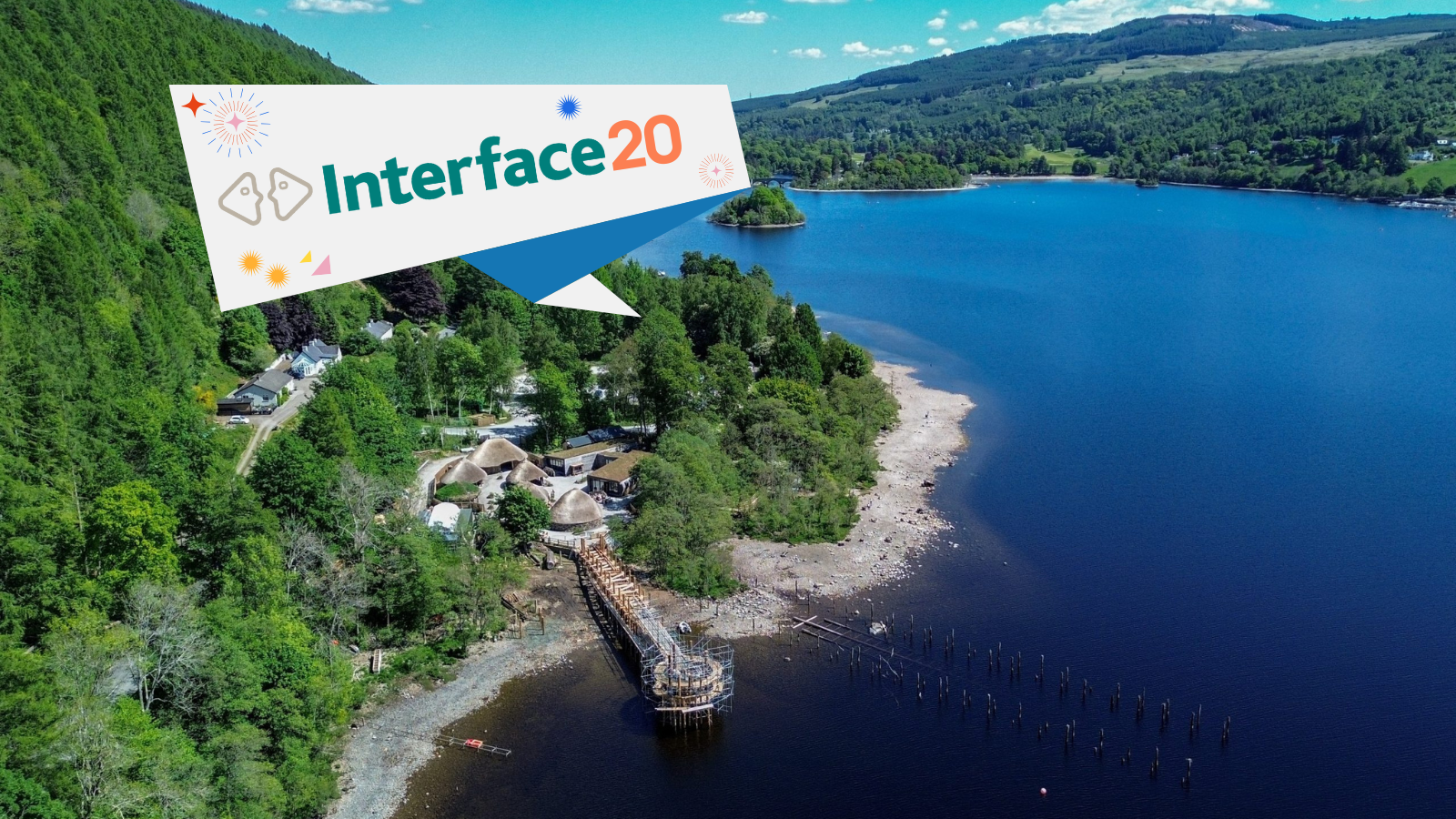
- The Scottish Crannog Centre, located on Loch Tay in Perthshire, is an award-winning museum and living history site dedicated to caring for, researching and sharing the stories of Scotland’s Iron Age crannogs bringing to life how people lived, built and engineered over water in 500 BC.
- Following the 2021 fire, the Scottish Crannog Centre relocated to a new site at Dalerb, more than tripling income, doubling staff and launching a £6m redevelopment including a new full-scale crannog built using Iron Age techniques.
- Since 2019, Interface has played a pivotal role in connecting the Centre with academic expertise, enabling over 20 collaborations across technology, engineering, design, sustainability, social impact and robotics
- Academic partnerships have delivered immersive interpretation including VR, interactive engineering models, tactile artefacts and film, modernising exhibitions while preserving the authenticity of hands-on heritage.
- University-led research has helped evidence and strengthen the Centre’s work with local communities, refugees, mental health organisations and young people with additional support needs, embedding social justice and sustainability at the core of the museum.
- The Centre provides a real-world testbed for applied research and student learning, while universities gain civic impact and visibility - creating a genuine win-win partnership model that continues to evolve, including future work in social robotics.
Partners
Edinburgh Napier University
Heriot-Watt University
University of Glasgow
University of the West of Scotland
Sectors
Creative Industries
Tourism and Leisure
Regions
Tayside
“What can I say – we have worked alongside colleagues at Interface since 2019 with over 20 different projects under our belt. Each project has sharpened and nudged us forward. This genuine relationship has also led to a long‑term partnership with UWS and connections with multiple universities. From immersive tech to engineering, sustainability and now social robotics, Interface has helped us open ourselves up to fresh, innovative thinking with real impact. It’s a win‑win‑win.”
Mike Benson, Director, The Scottish Crannog Centre
Background
The Scottish Crannog Centre, located on Loch Tay in Perthshire, is an award‑winning museum and living history site dedicated to caring for, researching and sharing the stories of Scotland’s Iron Age crannogs. Through reconstructed dwellings, experimental archaeology, traditional crafts and immersive interpretation, the Centre brings to life how people lived, built and engineered over water some 2,500 years ago.
Since the original Interface‑supported project, the organisation has undergone a period of profound change. Following the devastating fire in 2021, the Centre relocated to a larger, better‑situated site at Dalerb on Loch Tay. This move accelerated its transformation from a successful but ageing visitor attraction into a values‑driven, museum‑focused organisation with social justice, sustainability and community at its heart. The Centre has since more than tripled its income, doubled staff numbers and embarked on a £6m redevelopment programme, including the construction of a new, full‑scale crannog using predominantly Iron Age techniques and materials.
All of this growth has been underpinned by long‑term collaboration with universities across Scotland, brokered and supported by Interface.
The Challenge
As the Centre evolved, it faced multiple, interconnected challenges:
- Modernising interpretation and exhibitions while retaining the authenticity and emotional power of hands‑on, outdoor heritage.
- Demonstrating the sophisticated engineering, sustainability and ingenuity of Iron Age building techniques in ways that are accessible to diverse audiences.
- Embedding social impact, community participation and sustainability into the DNA of a new national museum.
- Rebuilding resilience, capacity and confidence following the loss of the original crannog.
Meeting these challenges required specialist academic expertise, fresh perspectives and the capacity to experiment – resources that are difficult for a small cultural charity to access alone.
The Journey and Interface’s Role
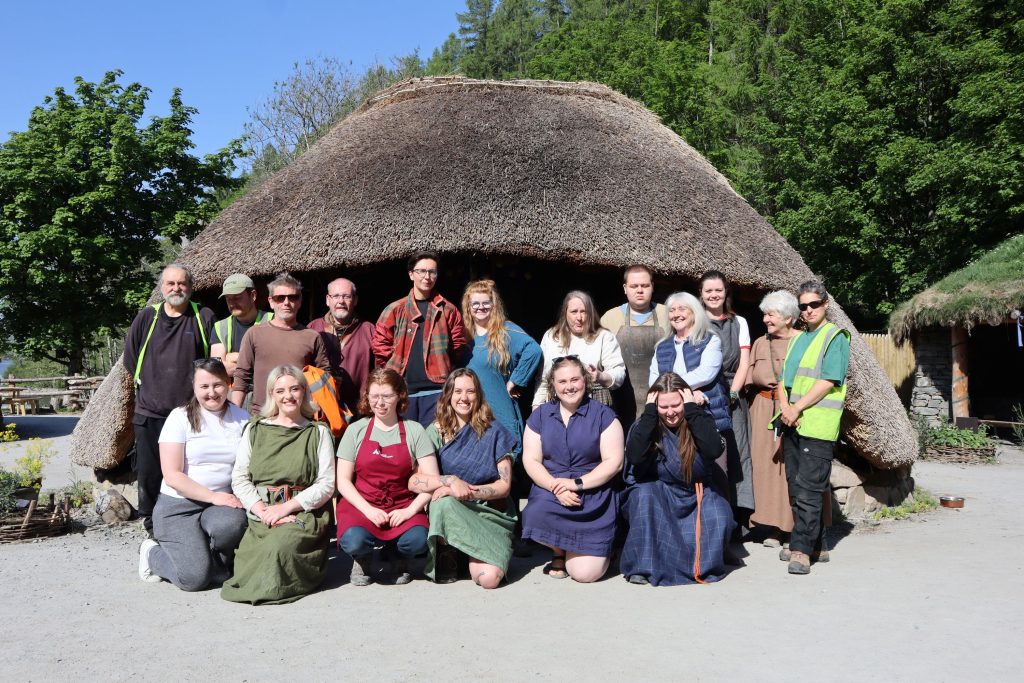
Interface has played a sustained, strategic role since 2019, acting as a trusted connector between the Scottish Crannog Centre and academic expertise. Innovation Engagement Executive Lorna Watson worked closely with Director Mike Benson and the wider team to understand evolving ambitions and identify the right academic partners at each stage of development.
Rather than a single intervention, Interface enabled a portfolio of collaborations that grew alongside the organisation, spanning technology, engineering, design, sustainability, social impact, marketing and robotics. Over 20 projects have now been delivered, many supported by Scottish Funding Council Innovation Vouchers and follow‑on funding.
Key Collaborations and Developments
Immersive Technology and Interpretation (University of the West of Scotland)
The original Innovation Voucher project with UWS laid the foundations for a step‑change in interpretation. It delivered:
- A feasibility study for immersive and mixed‑reality heritage experiences.
- Designs for augmented exhibition spaces.
- Prototype VR and mobile‑based experiences.
These outputs informed the creation of a new gallery and continue to shape the Centre’s approach to storytelling, helping collections to “sing” to different audiences. The partnership has since expanded to include branding, marketing, student placements, VR development and sustainability‑focused projects, forming a long‑term strategic relationship.
Artefacts, Design and Creative Media (UWS & UHI)
Follow‑on projects that brought unseen artefacts to life and enhanced The Crannog brand include:
- A 3D printed replica of a rare Iron Age musical instrument bridge that visitors can handle.
- A student‑designed comic book aimed at educating children on Iron Age Scotland, the artefacts found on the excavation site and how they relate to life in 500BC. An authentic and meaningful project, the comic book is still sold in the centre today and the storyline drives the puppet show delivered to families throughout the season offering a great way to engage with younger audiences.
- An important piece of work involved the rebranding of The Crannog prior to the launch of the new site in 2025 following a £6 million development. Ewan Smith, a design student with UHI Perth developed the branding, delivered workshops to staff and volunteers, tested and honed the design coming up with the complete branding both physical and online for the opening of the new site at Dalerb.
Engineering the Iron Age (Heriot‑Watt University)
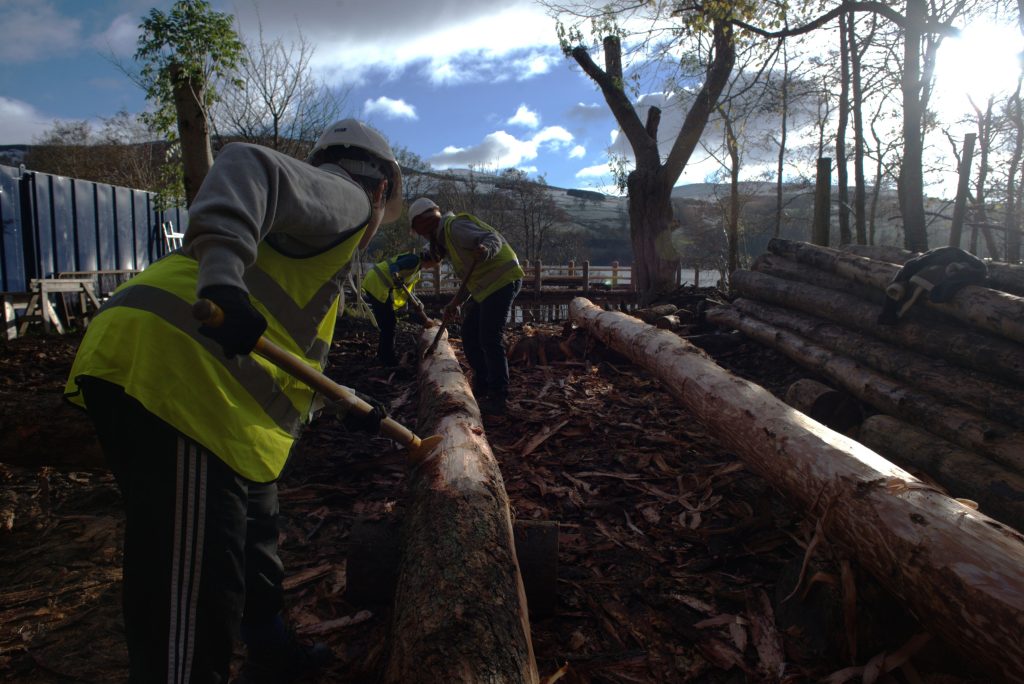
As part of the move to Dalerb, Interface connected the Centre with Heriot‑Watt University engineering students to explore the structural ingenuity of crannog construction. Working alongside craftspeople, archaeologists and engineers, students designed interactive model crannogs made from sustainable materials reclaimed from the main build.
These hands‑on models, launched in spring 2025, allow visitors to experiment with forces, stability and construction strategies, translating Iron Age engineering into playful, contemporary learning. For students, the collaboration reframed engineering beyond industrial contexts, highlighting sustainability, logic and longevity.
Measuring Social Impact and Sustainability (University of Glasgow)
A 2023/24 student placement focused on articulating the Centre’s societal impact. This work examined:
- Mentoring and work experience for local young people with additional support needs.
- Partnerships with organisations such as Glasgow Association for Mental Health, Maryhill Integration Network and UNESCO Refugee Integration through Languages and the Arts.
- The Centre’s four pillars of sustainability: people, partnerships, place and landscape.
The project helped evidence a sustainable museum model based on growing materials, skills, partners and audiences, supporting award submissions and future funding.
Film, Storytelling and the Rebuild (Edinburgh Napier University)
A filming placement documented the reconstruction of the new crannog, capturing traditional skills, community participation and the ambition to create a national museum with activism and inclusion at its core. This content supports interpretation, fundraising and digital engagement.
Looking Ahead: Social Robotics (University of Glasgow, 2026)
The next phase of innovation will explore human‑centred social robotics. In a co‑design research partnership, researchers will work with staff and visitors to prototype robots that enhance public engagement, for example, supporting tours or multilingual interpretation while reflecting the Centre’s values of inclusivity and care.
Impacts on the Organisation and Community
Organisational Growth and Resilience
- More than tripled income and doubled staff since relocation.
- Strengthened brand identity and national profile.
- Increased capacity to attract funding and deliver complex capital projects.
Innovation and Visitor Experience
- New galleries, interactive models, VR and tactile exhibits.
- Interpretation that connects ancient engineering, sustainability and contemporary challenges.
Community and Social Impact
- Deepened engagement with local communities, refugees, mental health organisations and young people with additional support needs.
- A co‑created museum shaped by “a thousand fingerprints and voices”.
Skills, Learning and Talent Pipeline
- Real‑world learning opportunities for students across engineering, design, media, computing and social sciences.
- A two‑way exchange where academic insight and lived heritage practice inform one another.
Academic Benefits
Academic partners have gained access to a rich, real‑world testbed for applied research and teaching. Students engage with authentic challenges, while universities strengthen their civic mission and visibility. Relationships have extended into advisory roles, placements, curriculum enrichment and long‑term research collaborations.
Moving Forward
The Scottish Crannog Centre demonstrates how sustained academic collaboration – enabled by Interface – can transform a small heritage organisation into a resilient, innovative, community‑centred national museum. Geography has proven no barrier to excellence; instead, partnership, curiosity and shared values have driven growth, impact and ambition far beyond the loch shore.