Blog
Reducing carbon footprint one step at a time
Net zero, carbon emissions, climate destruction, greenwashing, sustainability…. the language around environmental issues can feel complex and, at times, overwhelming, and that’s before taking any proactive steps to tackle climate change. Fortunately, there is a manageable way to build understanding and confidence – by becoming Carbon Literate.
At Interface, the team have all successfully completed Carbon Literacy training to strengthen our knowledge of the issues at stake, be better equipped to support businesses and academics, and take action to reduce our personal and professional carbon footprints.
The training, accredited by the Carbon Literacy Project, raises awareness of the carbon costs and impacts of everyday activities, and empowers and motivates participants to make informed changes that can reduce emissions, on an individual, community and organisational basis. Certification requires each individual to pledge to take action to reduce their impact on the planet – whether that means flying less, sourcing locally produced food, hosting events online where appropriate, or working with suppliers who share our environmental goals. This work also marks an important milestone for Interface in working towards becoming a Carbon Literate Organisation, demonstrating our commitment to addressing the climate crisis in a recognised and accountable way. While a core part of our role is enabling collaborations between businesses and academia that support climate solutions, we recognise the importance of leading by example in our own practices. In parallel, we are developing a sustainability action plan aligned with the University of Edinburgh sustainability framework, ensuring our internal operations reflect the same priorities we promote externally.
As we support Earth Day, where every action counts and every voice matters, we share some of our pledges to show that small steps are a crucial way of making us feel that we are treading lightly and playing our part when global challenges can seem overwhelming.
Elaine Sneddon, Marketing Executive, said: “I made a personal pledge to review energy use, recycling, travel, food usage/wastage in the family home. At work, I pledge to look at ways we can make the Scottish Knowledge Exchange Awards more environmentally friendly e.g. sustainable venue choice, central location to reduce travel for attendees, encouraging public transport usage and use of local produce/suppliers.”
Meanwhile, Nicola Brooks, Innovation Project Officer, pledged to: “Buy more eco-friendly cleaning products; reduce the number of new items we need to buy; recycle/repurpose IT equipment and furniture; and organise team activities which will help to cut carbon emissions.”
Heather Rattray, Head of Marketing and Operations, said: “My commitment is to think about the type of events we run – face-to-face versus online – to reduce the carbon footprint. In addition, we will review the suppliers that we use for marketing materials ensuring that their net zero credentials fit with our own goals.”
Suzy Powell, PR & Communications Executive, added: “I have committed to write a series of articles promoting carbon neutral goals and the positive ways that Interface is supporting businesses and third/public sector organisations reach their goals.”
Shelley Breckenridge, Senior Innovation Engagement Lead, pledged to “focus on buying locally produced food and drink and reduce consumption of high food mile, resource-intensive foods as I was eating a lot, such as avocados, almonds etc, so am buying more seasonal produce from local markets and bakers, so supporting communities too.”
Laura Goodfellow, Associate Director of Innovation Engagement, said: “To reduce our digital carbon footprint, I will continue to prioritise improving and evolving our digital processes, specifically addressing the use of email attachments which I was not aware had a carbon impact before the training and although individually the impact is tiny, completely it will mount up. The shift towards online forms continues and we hope these changes will be fully integrated into our processes in 2026.”
Meanwhile, Jackie Sanderson, Innovation Engagement Lead, said: “I pledge to recycle and upcycle (reduce rubbish to landfill); stop buying ‘fast fashion’; make my own cleaning products (bicarb, vinegar etc); buy more seasonal & locally sourced food; reduce my digital footprint by cutting back on emails; and car share where possible when going to events.”
The team at Interface is committed to contributing to Scotland’s journey to net zero by 2045 and sometimes it’s the small steps which make the biggest difference – every storm starts with a raindrop.
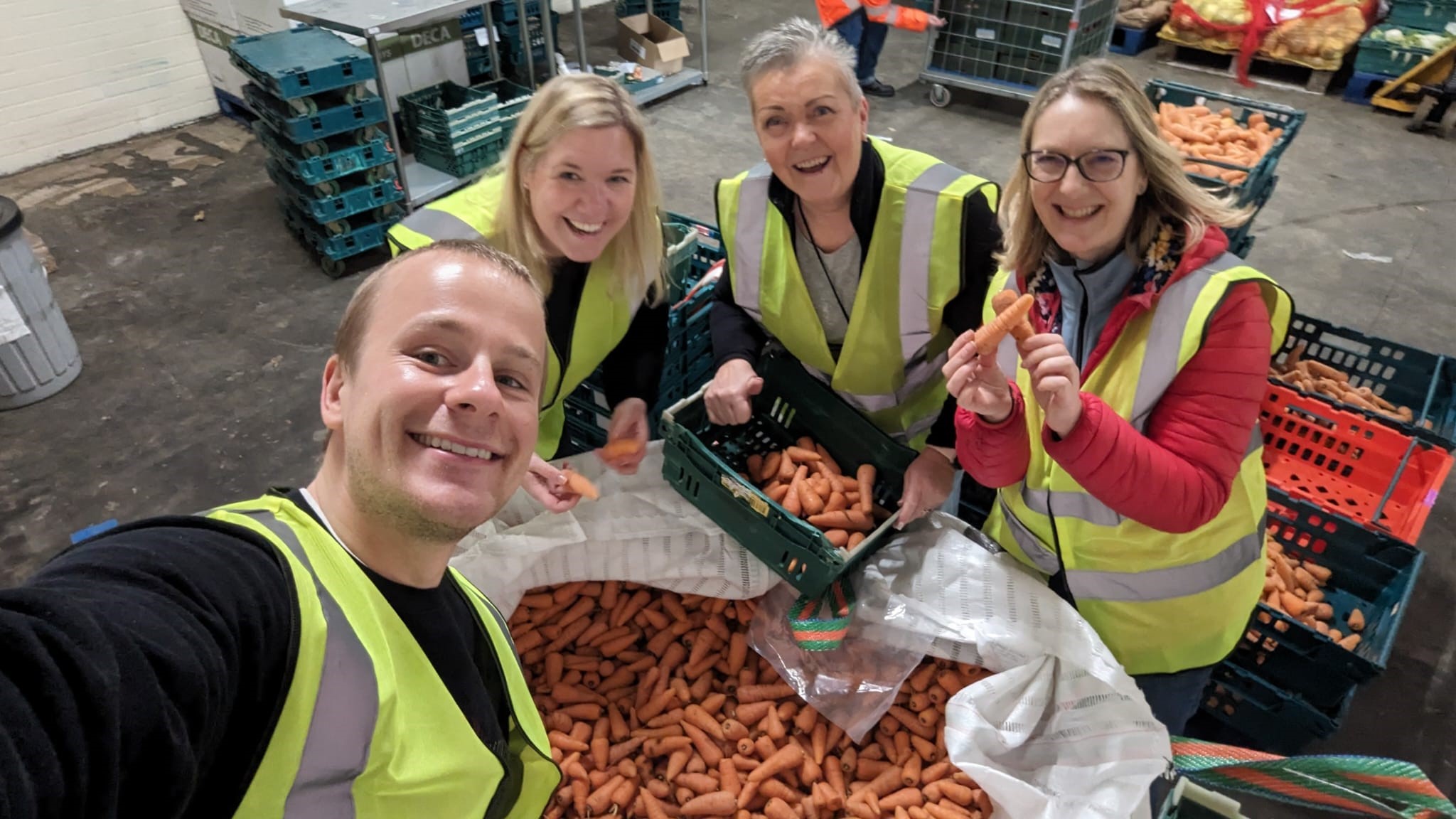
Photo: Volunteering to redistribute unwanted food is one way the team at Interface has helped reduce environmental impact.