Blog
Game, set and matched-by-Interface
As memories of a thrilling World Cup linger, and the Commonwealth Games delivers top class entertainment and nail-biting moments, 2026 brings renewed focus to the power – and possibilities – of sports. So, how is innovation in the sector leading the way when it comes to driving technology advancements with applications far beyond the sporting arena?
The world of sport has long been an inspiration for the business world – for starters, the language of field, track and pitch has been adopted in the boardroom and office alike. From playbooks and long runs, to making pitches and game on, the lexicon is interchangeable between the two.
And the hurdles faced in sports are often found in other industries, resulting in similar solutions – aircraft seating inspired by yacht berth designs is a well-known example of innovation crossing industry boundaries.
Professor Ross Tuffee, Entrepreneur in Residence at the University of Stirling, and founder of sports tech and wellbeing innovation hub, Motion Lab Ventures, said: “Sport drives technology advances and is a gateway into many other high impact sectors, for example, developments in sports flow into health and wellbeing, advanced manufacturing and security. Also, fan engagement is applicable to any consumer-facing organisation. With the global expansion through digitisation, you can watch a match or sporting event anywhere, any time with anyone.”
Ross recently spoke to the Interface team about current trends in sports – namely, the resilience of the sector during economic downturns; the exponential growth of women’s sports; and the role of AI as an enabler, rather than a replacement. He also highlighted how sports influence other sectors.
For example, fan engagement and the fan experience can be transported into customer engagement in a range of scenarios – every consumer facing brand wants to create “fanatics” that adore what the brand offers!
Our partners at the Co-STAR: Realtime Lab at Abertay University and the University of Edinburgh (part of the national testbed for virtual production) have experimented with bringing people in different locations together for an immersive and interactive “watch party”.
Sports fans in Dundee, Salford, Cardiff and Belfast, were immersed in the action of the Scotland V Wales 6 Nations rugby, with bespoke content, real-time graphics and lighting. Fans were able to interact through an app, helping them get closer to the game, and each other, through a series of games and real-time responses to the sporting action.
Designed as a proof of concept, the trial used 5G technology to demonstrate how fans in different places can be authentically connected to a single, immersive experience and to each other.
There is an abundance of easy to access facilities throughout Scotland’s universities and colleges which are available for testing, developing, and analysing products, processes and services.
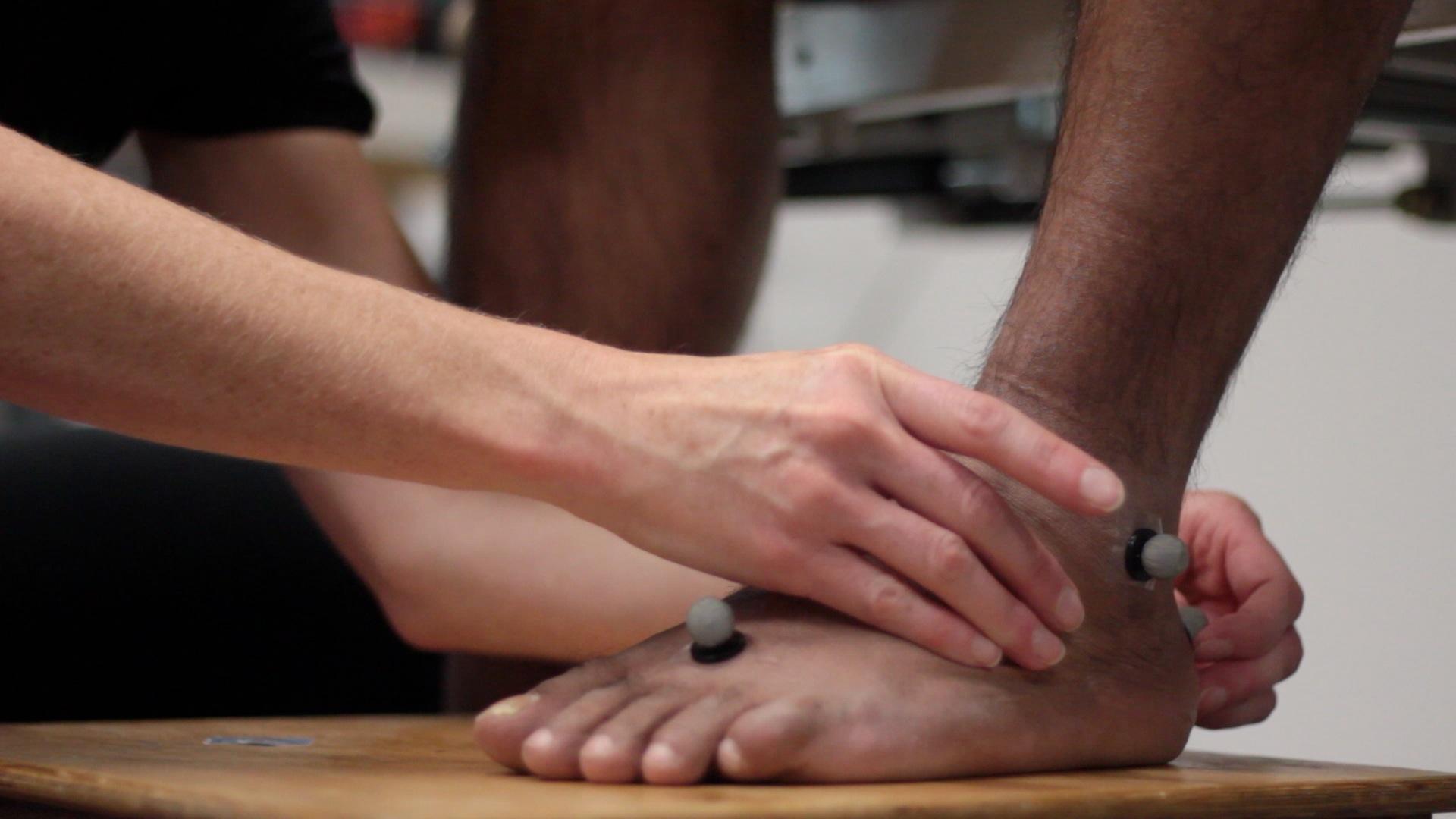
For example, human performance labs using cameras to capture motion to analyse body movement such as kinetics, pressure, posture, energy expenditure, gait analysis and even body composition.
One particular example of these facilities in use comes from StEPS Podiatry who, through Interface, gained access to highly specialised motion capture equipment at the University of Strathclyde for use in the development of preventative screening equipment that aids recovery from sports injuries. By identifying potential issues before they develop into serious injuries, the technology also has the potential to prolong athletic careers and support long-term performance.
Taking these types of measurements can help to understand movements of the human body which can be used to improve patient care. Human performance labs can also be used to animate digital character models. Precise measurements allow more lifelike motion, complex movements and longer movement sequences to be animated.
Meanwhile, the environmental performance lab at Edinburgh Napier University prepared Grant Hanley of the Scotland squad for the heat and humidity of playing in the World Cup. He was put through a series of monitored training sessions, giving his body the best chance to acclimatise to the conditions he faced.
Research and innovation can be a game-changer for all involved, from athletes to businesses and academic partners. Good luck to all those taking part in this year’s summer of sport!
To quickly find relevant academic partners and facilities to support, test and validate product development, technologies and performance, please contact us.